
 加载中…
加载中…
美国HeadphoneGuru网站对歌德GT220真无线耳塞的评测
(2021-05-19 11:06:01)
标签:
grado真无线 |
分类: 耳机/耳塞/耳放的评论 |
Headphone
Guru网站在圈内还是有影响的,这篇GRADO GT220真无线耳塞的评测作者是其专栏评测员Bowei
Zhao,从名字看是中国人,但从其英语来看应该是个ABC吧,不是中国人写的英语。他为网站写过很多耳机耳塞等的评测,应该算资深Guru吧。下面是原文,想直接看中文翻译摘要的,跳到文末。
https://headphone.guru/wp-content/uploads/2021/02/IMG_20201022_185813.jpg
https://headphone.guru/wp-content/uploads/2021/02/IMG_20201022_190523.jpg
https://headphone.guru/wp-content/uploads/2021/02/IMG_20201022_185945-edited.jpg
https://headphone.guru/wp-content/uploads/2021/02/IMG_20201022_190022.jpg
https://headphone.guru/wp-content/uploads/2021/02/IMG_20201022_190234.jpg
https://headphone.guru/wp-content/uploads/2021/02/IMG_20201022_190247.jpg
https://headphone.guru/wp-content/uploads/2021/02/IMG_20201022_190540.jpg
It hasn’t been more
than two years since True Wireless headphones started dominating
the landscape. What started out as a fad sparked a powder keg of
mass consumer adoption. This phenomenon increased the push towards
fully wireless on-ear headphones and ushered in the near
obsolescence of ‘neck-band’ wireless earphones.
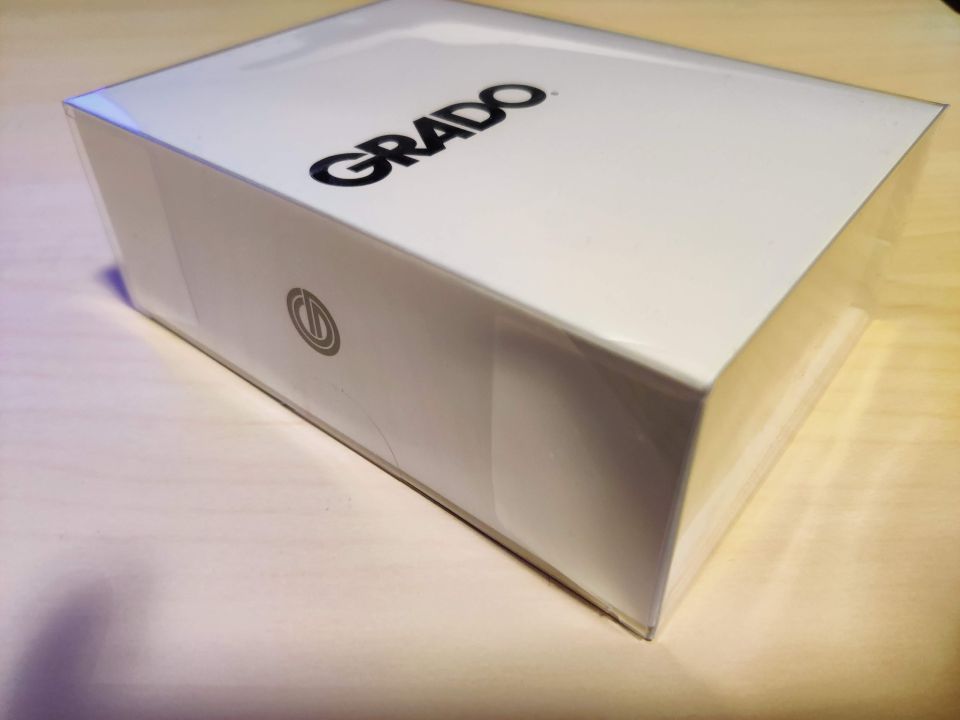
Just last year, Grado
stunned me with their GW100 open-back wireless headphones. They
were portable, lightweight, punchy, and sported a stellar sound
without breaking the bank. At the time of that review, I was
waiting with bated breath to see what else Grado had in store for
us. A year later we have our answer.
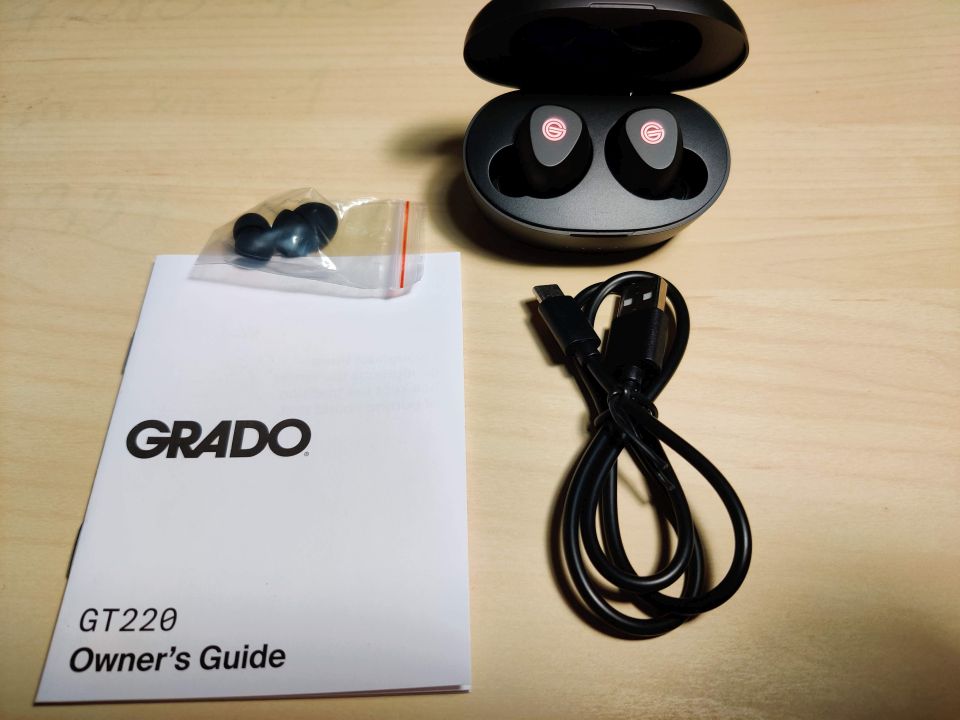
Introducing the Grado
GT 220 True Wireless headphone ($259). Coming off the success of
their GW100, the GT 220 is described as a ‘continuation of making
Grado’s signature sound wireless’.
Usability:
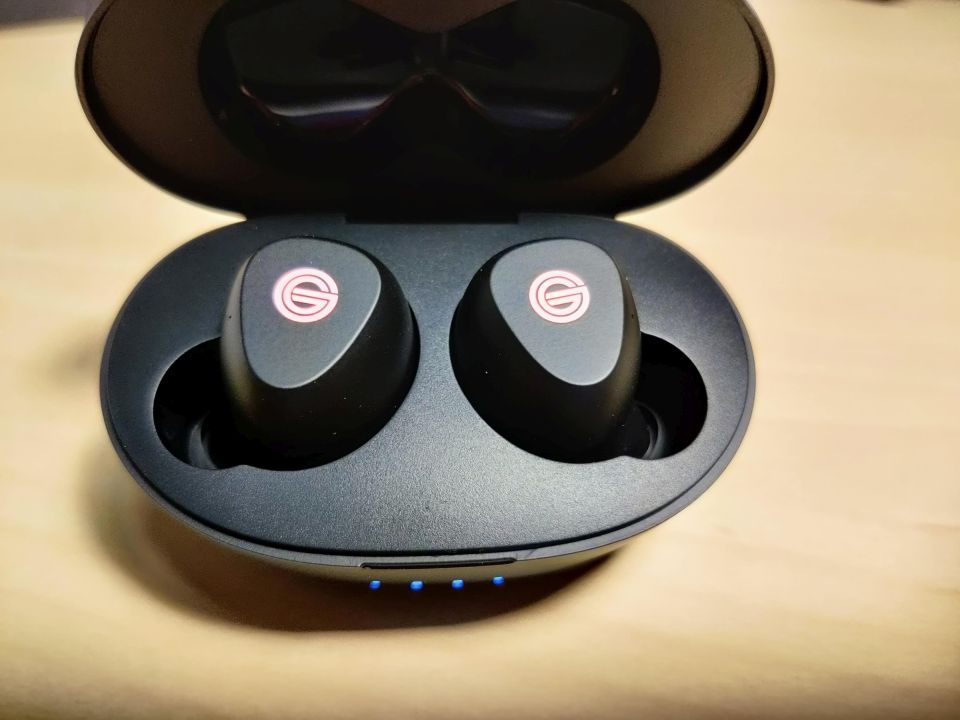
The GT 220’s come
with the typical arrangement of included goods. You get the
earphones, a case capable of charging 5 times, a USB-C cable, a
pack of eartips, and some manufacturer sheets. One neat highlight
of the GT-200 is that the case can be charged on a wireless Qi mat.
The headphones are rated for 6hrs of runtime off their internal
batteries which I can attest to.
I was caught off
guard by the size of the GT 220s out of the box. The large driver
size and touch controls require you to spend the first few tries
getting it so it’s “just right”. Grado includes recommended fitment
instructions with the units and that greatly improved my
experience. It requires you to pinch the outer shell of the housing
without touching the touch-sensitive face and to use your other
hand to assist in placing the headphones in (similar to any other
IEM). The trick is to not push the GT 220 too deep into your ear
canal. I found that it took a few tries but afterward, putting the
GT 220 into my ears was a cinch. One recommendation I have for
improving usability is to use aftermarket ear tips. The included
ear tips are your generic assortment, I personally recommend going
with Spinfit or Sedna. Both were wonderfully paired with the GT
220.
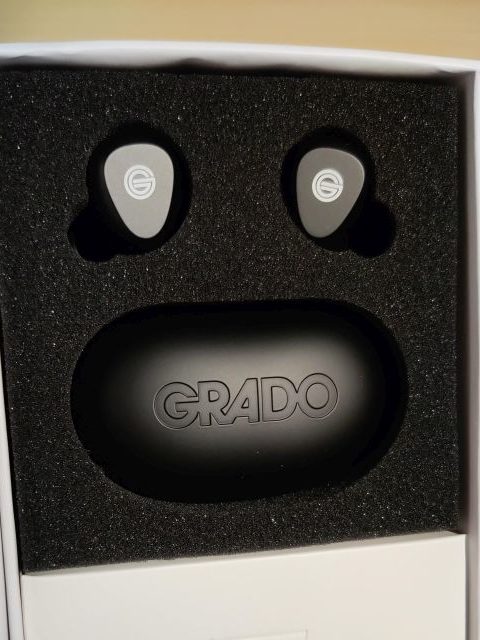
Touch interfaces are
all the craze of the last decade and the GT 220 features one on
both of the earbud’s face shields. They are used to control
playback, volume, and engage your phone assistant. My
recommendation to Grado is to remove the touch face. It gets in the
way when you are inserting the earbuds and has to be tiptoed around
to not accidentally activate it. I have noticed that there is also
a bug where upon taking the units out of the case, there is a
chance that the volume controls engage. Much to my chagrin, this
causes the volume to either increase or decrease for about ten
seconds.
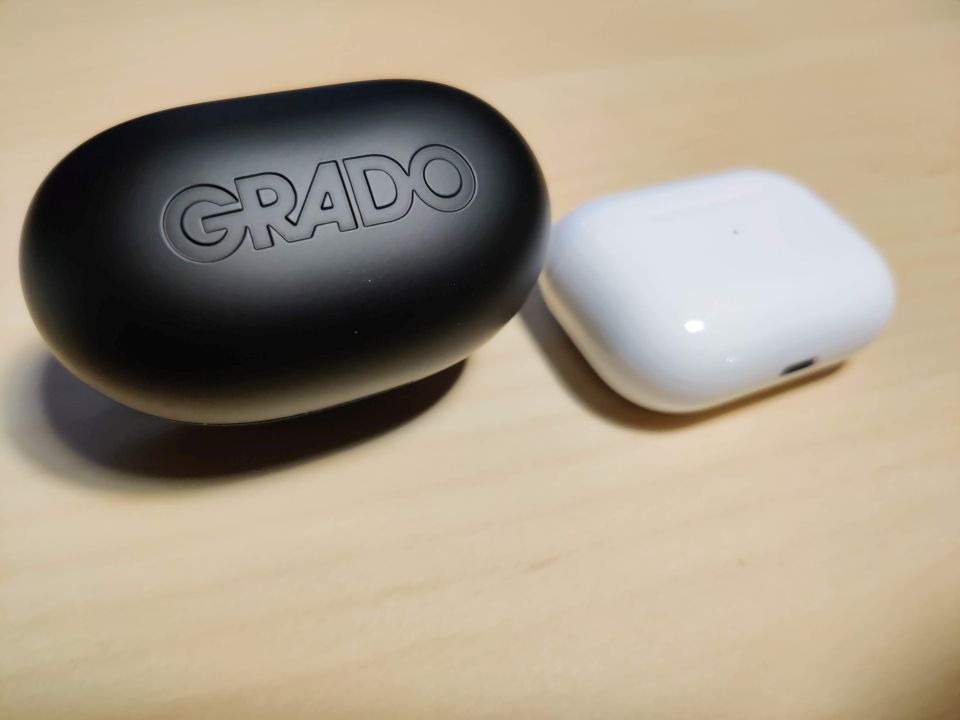
The included charging
case features an impressive 36 hours of battery for the GT220 (on
top of the 6hrs the unit includes). This beats out both the Galaxy
Buds Pro and AirPod Pros. However, this comes at a cost of size
with the latter two boasting more minimal footprints. During my
testing, I found the GT 220 to be more of an ‘audiophile’ true
wireless option rather than a lifestyle product like the Galaxy
Buds or AirPods. With that use case in mind, it makes sense why
size and prioritizing charge trumps the more minimal
size.
While the market for
true wireless headphones maintains the ‘lifestyle’ identity, the GT
220s deliver more on the audiophile side than as an outdoor use
one. During my weeks of testing, I’ve found that when it comes to
working out, handling calls, going on walks out in the city, the GT
220s just aren’t up to the grade compared to the goliath in the
room; the Apple AirPod/Pros. The larger size and center of gravity
of the Grado’s cause them to not stay in place during long walks or
exercise. The charging case also needs to be carried in a backpack
or purse, it’s just large enough where pocket carry is discouraged.
The GT 220 isn’t a direct AirPod or Galaxy Bud competitor. It is an
audiophile-tuned headphone in the true wireless form factor. I
found that this unique take on the market actually increased my
perception and usage of the GT 220s. There were more than enough
day-to-day use scenarios where I needed a great-sounding headphone
that would be accessible and deployable within seconds while
cooking, studying, or doing chores. I saw it
as the
The most impressive
aspect of the GT 220 is its seamless pairing and headphone
synchronization. Having used both the AirPod Pro and GT 220 for an
extended period of time, I found that the GT 220 has a near-perfect
track record for connecting to my smartphone compared to the AirPod
Pros. On top of that, in the rare scenario when one of the GT 220
true wireless earbuds did not connect to the other, the built-in
recovery routine pairs the two earbuds back together near
instantaneously. Compared to that, the Apple AirPod Pros have an
abysmal record of self-recovery if one of the AirPods did not power
on or connect properly. Overall, I am beyond impressed with the
Grado GT 220’s wireless connectivity suite; they connect fast and
always work out of the box.
Sound:
The GT 220s were
tested with the One Plus 8 and with Spinfit tips. Qualcomm aptX at
44.1 kHz/16-bit was the auto negotiated setting and the highest
available. A mix of Spotify Premium and Qobuz Studio was utilized
during my tests. Big thanks to our partners at Qobuz for this
access and huge selection of lossless sources.

The sound signature
of the GT 220s is dark, bassy, with a slightly recessed midrange
and warm timbre in vocals. It’s light on soundstage but leads every
other True Wireless on the market with its fun and adaptable sound,
low-end punch, and vocal re-creation.
Listening to one of
my favorite test tracks, “Parce Mihi Domine” by Jan Garbarek, the
GT 220s amaze out of the box with their clarity in the upper mid to
high range. Although the GT 220s do lean lower on the octave (in
terms of reproduction) on my first few tests, I found the upper
midrange to actually come through. When the horns came in, the
headphones were able to hit well into the 5-7 KH range and remained
stable through the duration. The background was mostly quiet albeit
the slight noise emanating from the GT 220s amplifier was audible
at times. Soundstage isn’t the forte of the GT 220s compared to the
rest of Grado’s iconic lineup, but considering this is the smallest
driver size they have perhaps ever worked with, in a closed
earphone, it was to be expected.
Next up, modern pop
with “Shallow” by Lady Gaga and Bradley Cooper from the 2018
standout film “A Star Is Born”. I found the GT 220s to have a
slight recession in the vocals but remarkable stability and range
extending into the upper-midrange. Bradley’s voice was deep and
gritty while Stefani’s produced stunning detail as she hit into the
upper notes. I would consider the naturalness to be a hair-pin
offset from neutral mainly due to the darker tendency of the unit.
One area I was hoping for more in would be the energy of the
midrange which fell flatter than I was hoping compared to say the
Ananda (open back planar). Which speaks volumes to the GT 220 that
I’m even bringing up this comparison.
One of the biggest
draws the Grado has that makes me choose it out of my arsenal of
headphones would be the bass. It’s not shy and isn’t tuned to be
overwhelming but rather as a complement to the music. I wouldn’t
remark it to be a ‘tight’ low-end but akin to that of a good home
theater subwoofer from say Klipsch. Present and complementary
albeit lacking in extreme micro detail and texture compared to an
Audeze LCD or Diana Phi. It’s a great addition whether you are
listening to classical, modern pop, or even
rock.
But perhaps the main
draw would have to be its balance. With “Piano Man” by Billy Joel,
the idea of balance is brought to the forefront. With prominent
vocals, harmonica, a sub-beat, and pianos mixed in. I found the GT
220 to be tuned to bring out the vibrancy in Joel’s voice and
recordings which do lean towards that mid recession. The mix and
mesh of instruments have powerful delivery and despite a complex
mix of harmonics near the second half, the GT 220 keeps up and
shines. The large driver size and Grado’s tuning pays dividends in
heaps here.
I’m a huge fan of the
sound of the GT 220. It’s vibrant and fun and has just enough
dynamic punch in the midrange to be interesting while still
maintaining a neutral balance (albeit leaning
darker).
Conclusion:

Grado’s first foray
into a closed back true wireless was met with mixed signals on
first announcement in the market. It’s a departure from the typical
Grado headphone and even I was curious about its implementation.
The touch interface is a neat idea but dull in actual usage and
something I wish to see replaced in the future. I am also hoping
that Grado includes better tips with the GT 220 in the future as
well, the improvement in usability and sound is immense with
stiffer ones from Spinfit or Sedna.
Whatever doubts I may
have had in the beginning are gone. The GT 220 is simply the best
sounding True Wireless on the market with a focus on sonic
reproduction. Lifestyle product be damned; it’s the audiophile take
on the true wireless market. Grado may have just joined the
wireless market, but they are making large splashes with their
expertly tuned headphones.
Price: $259
USD
Specifications:
- Bluetooth: 5.0
- Battery Life: 36 hours
- Headphone Battery: 6 hours; 50mAH
- Case Battery: 5 full charges; 500mAH
- Charging: USB-C, Wireless; 2 Hours
- Codec: aptX, AAC, SBC
- Frequency Response: 20Hz~20KHz
-
Water/Sweat Resistance Rating: IPX4
简要说下评测的主要意思:
一、GRADO GT220是市面上声音而言最好的真无线耳塞。那些lifestyle之类真无线可以不看了。这是真无线耳塞里真正的audiophile“发烧级”产品。虽然歌德是这块产品领域里新加入的,但专业级的调音带来了一款声音出色的产品。
二、作者非常喜欢GT220的声音,有乐趣、有活力,特别是中频段表现出彩,但是又没有过分,还是保持了“中性”的基本平衡度(略偏暗)。
三、低频表现出彩,既不畏缩,也不过分膨胀,乐感和协调性好,给人一种接近Klipsch(杰士)低音炮的感觉。无论是欣赏古典、流行歌曲还是摇滚,这种低频都合适。
四、整体上GT220的声音特征可以总结为:色调略暗、偏低频、中频轻微地后退、人声温暖,5-7千赫兹的中频上段(Upper Midrange)也表现很好。在声音的乐趣、低频冲击力和人声表现方面领先于市面上所有其他的真无线耳塞。声场表现不如歌德的其他耳机产品,但可以理解,毕竟是真无线耳塞。
一、GRADO GT220是市面上声音而言最好的真无线耳塞。那些lifestyle之类真无线可以不看了。这是真无线耳塞里真正的audiophile“发烧级”产品。虽然歌德是这块产品领域里新加入的,但专业级的调音带来了一款声音出色的产品。
二、作者非常喜欢GT220的声音,有乐趣、有活力,特别是中频段表现出彩,但是又没有过分,还是保持了“中性”的基本平衡度(略偏暗)。
三、低频表现出彩,既不畏缩,也不过分膨胀,乐感和协调性好,给人一种接近Klipsch(杰士)低音炮的感觉。无论是欣赏古典、流行歌曲还是摇滚,这种低频都合适。
四、整体上GT220的声音特征可以总结为:色调略暗、偏低频、中频轻微地后退、人声温暖,5-7千赫兹的中频上段(Upper Midrange)也表现很好。在声音的乐趣、低频冲击力和人声表现方面领先于市面上所有其他的真无线耳塞。声场表现不如歌德的其他耳机产品,但可以理解,毕竟是真无线耳塞。
-完-
喜欢
0
赠金笔